
Primary research
The Smyth (2020) study
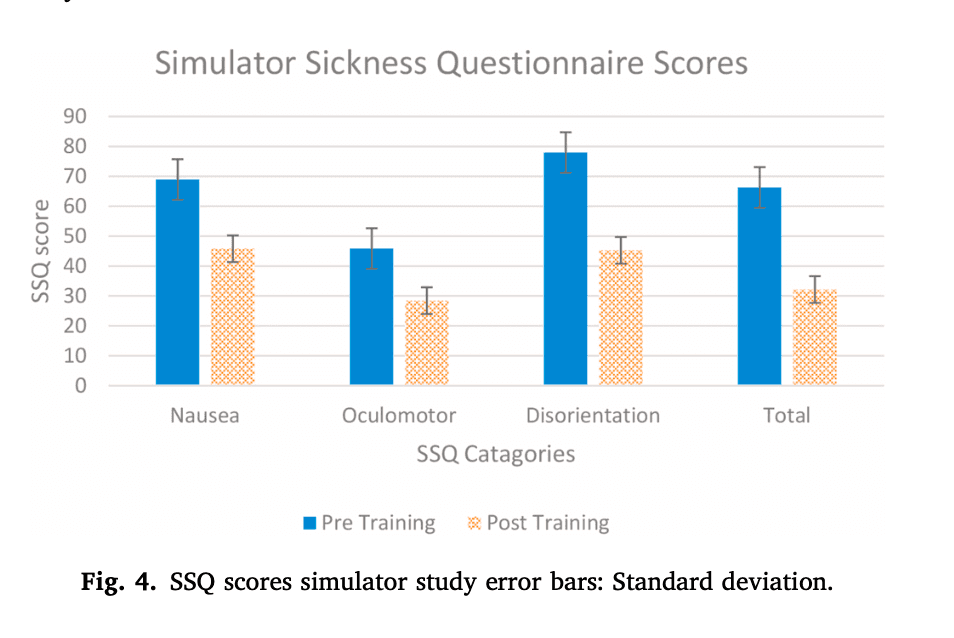
The program is based on research published in Transportation Research Part F. Participants completed 14 days of pen-and-paper visuospatial exercises (~15 min/day), then had their motion sickness measured in a driving simulator and on a real road.
Peer-reviewed · Published 2020
Read the full studyVisuospatial training reduces motion sickness susceptibility
Transportation Research Part F: Traffic Psychology and Behaviour
58%
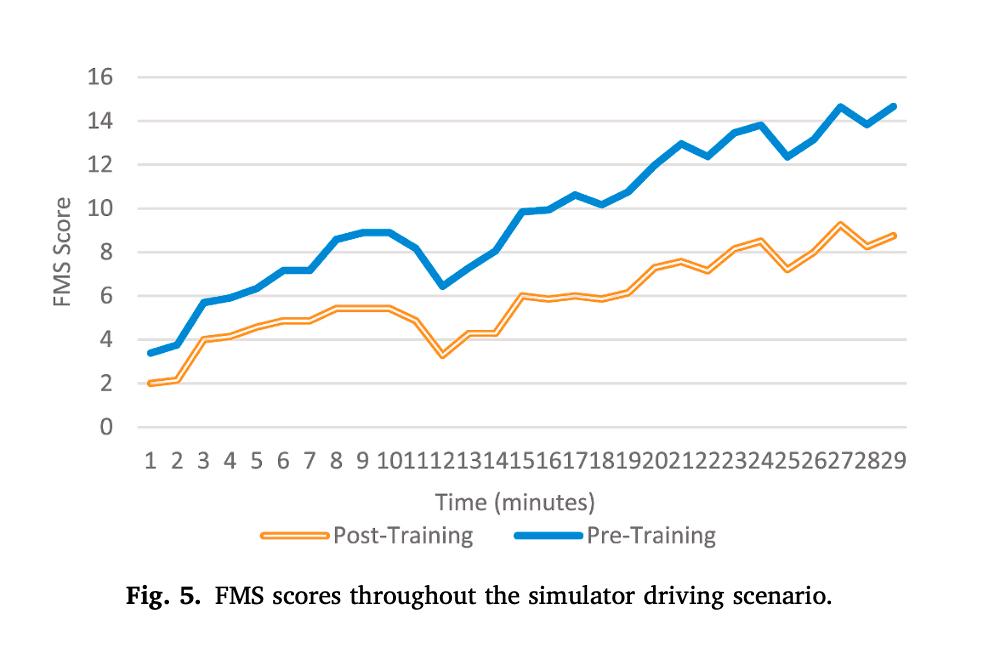
On-road reduction
After 14 days51%
Simulator reduction
After 14 days40%
Spatial skill gain
Mental Rotation Test46%
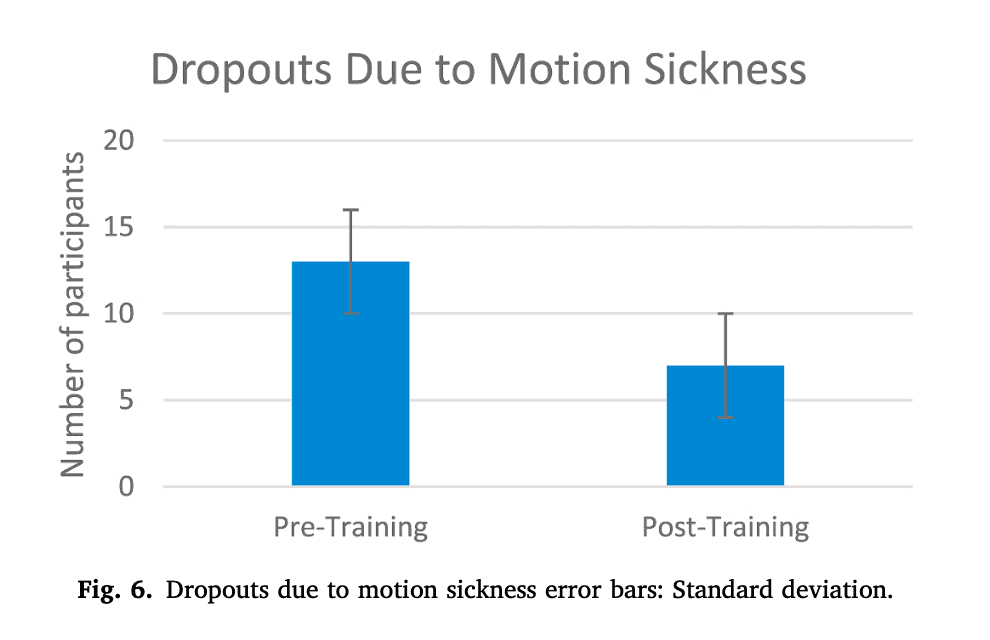
Fewer dropouts
From motion sicknessSimulator Sickness Questionnaire (SSQ) scores
Dropouts due to motion sickness
Fast Motion Sickness (FMS) scores over time
“After training, participants’ Mental Rotation Test scores improved by approximately 40%, accompanied by a 51–58% reduction in motion sickness severity.”
— Smyth, M. (2020). Transportation Research Part F: Traffic Psychology and Behaviour.